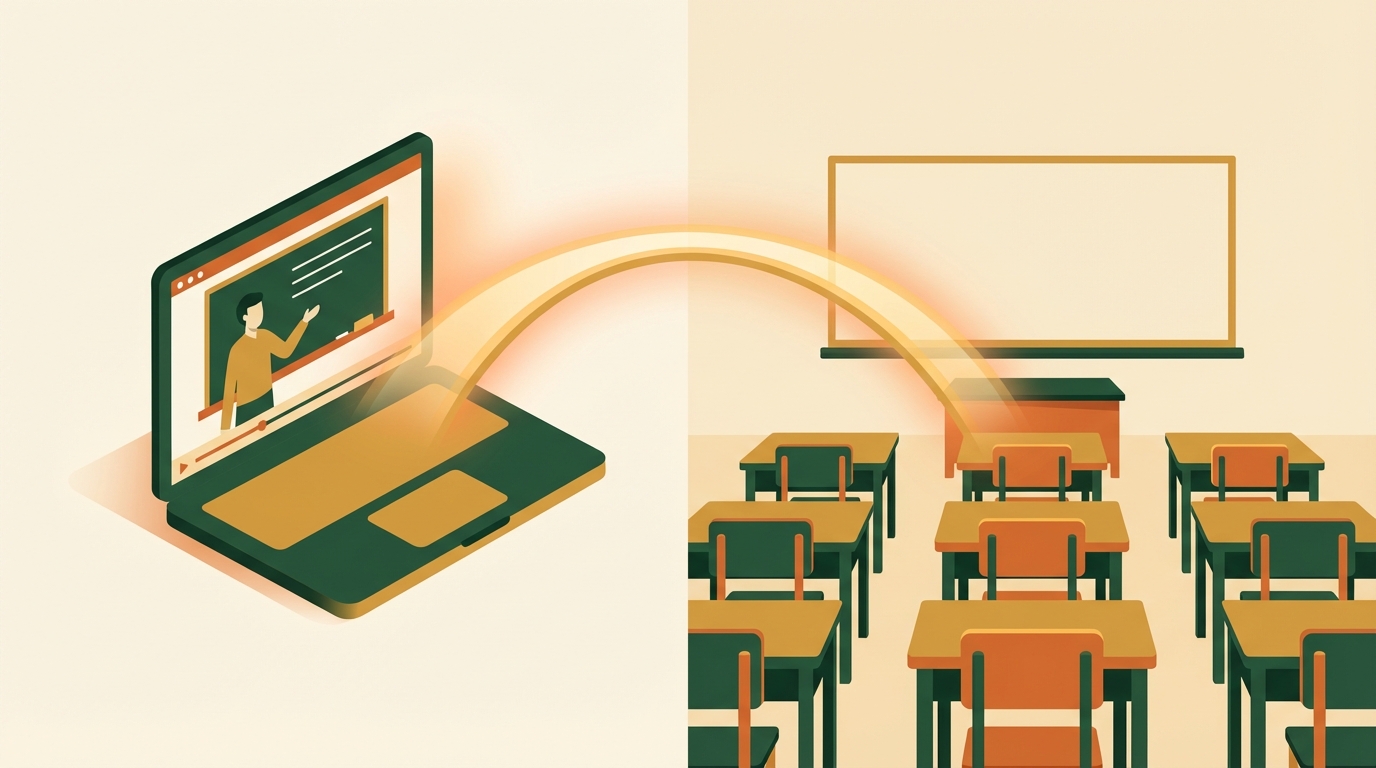
TL;DR: There is no evidence either format passes more people, because PRC publishes results by school of graduation and never by review centre or review method. Choose on the things that are actually different: classroom buys structure, live questioning and peer pressure but demands you be in the city; online buys flexibility, replays and a far lower total cost but demands self-discipline. Check one thing first — whether your board is computer-based in PRC current calendar, because that should decide how you practise regardless of format.
Introduction
Philippine review centres used to be exclusively classroom operations concentrated in Manila, Cebu and a few other cities. Since 2020 nearly all of them run some form of online programme, and a genuine choice now exists for most licensure examinations.
The choice is usually presented as a question about effectiveness. It is not, because the data to answer that question does not exist. It is a question about your schedule, your location, your budget and your self-discipline — all of which you can assess honestly, and none of which a review centre advertisement can tell you.
Start with what nobody can tell you
Two facts should frame every claim you read about review formats.
PRC does not track results by review centre. What PRC publishes for each administration is a Performance of Schools report, ranking institutions by the results of their own graduates. That is the only official, audited performance data in the system, and it is about universities. There is no equivalent for review centres, and none at all for online versus classroom delivery.
Review centres are not regulated. In Review Center Association of the Philippines v. Ermita, G.R. No. 180046, decided 2 April 2009, the Supreme Court declared Executive Order No. 566 — issued in 2006 to place review centres under CHED supervision after the nursing board leakage — and CHED Memorandum Order No. 30, s. 2007 void for being unconstitutional, because the President had expanded CHED jurisdiction beyond RA 7722 without enabling legislation.
Seventeen years later, no agency licenses, inspects, accredits or ranks review centres in either format. Every passing rate, topnotcher count and branch tally you see is self-reported and unverified. That does not make it false. It means the honest way to compare formats is on what they structurally do, not on numbers neither of you can check.
One thing to check before anything else
PRC 2026 calendar, issued as Resolution No. 2113, s. 2025, marks a growing set of examinations as computer-based licensure examinations (CBLE) — among them chemists, geologists, librarians, mining engineers, naval architects, psychologists, environmental planners and veterinarians. The largest boards, including nurses, professional teachers and certified public accountants, remain paper-based.
If your board is computer-based, on-screen practice stops being a preference and becomes preparation. If it is paper-based, you still need timed paper practice with a shaded answer sheet regardless of how you attend lectures. Confirm which yours is in our 2026 board exam schedule before you choose a format.
Classroom review
How it works
A fixed schedule, typically three to four months of daily lectures at a physical location, often running from morning to late afternoon, with instructors teaching live.
What it structurally gives you
- Structure you cannot postpone. There is no "watch it later." You attend or you miss it, and that constraint does the work that self-discipline otherwise has to.
- Live questioning. You can interrupt, ask, and get an answer in the moment rather than filing it and forgetting it.
- Peer pressure, in the useful sense. Sitting among hundreds of people doing the same thing changes your baseline of what a normal study day looks like.
- Exam conditions by default. In-class quizzes and mock exams are timed, invigilated and collectively stressful, which is the condition you are training for.
- Fewer competing demands. Being physically elsewhere removes household chores, family requests and your own bed from the equation.
- A network. The people beside you become colleagues, study partners and, later, referrals.
What it costs you
- Geography. Most established centres cluster in a handful of cities.
- Living expenses. Relocation adds rent, food and local transport on top of tuition, and these usually exceed the tuition itself.
- A fixed schedule. Full-day classes are incompatible with a job or with caregiving.
- Commuting. In Metro Manila, hours a day that could have been study time.
- Single points of failure. Illness, a typhoon or a transport strike costs you a session outright unless recordings are included.
Online review
How it works
It varies more than people expect. Some programmes are live-streamed on a fixed timetable, some are pre-recorded and self-paced, and many mix both with digital quizzes, discussion channels and mobile access.
Ask which one you are buying. "Online" describing a self-paced video library and "online" describing a live-streamed classroom are two different products with two different failure modes.
What it structurally gives you
- Location independence. Province, home, or abroad, with no relocation.
- Replay. The single largest genuine advantage. A concept you did not follow can be rewatched until you do, which a live classroom cannot offer.
- Time flexibility. Study at the hours you actually think clearly, and around work or family.
- Much lower total cost. Not primarily because tuition is cheaper, but because rent, food and transport disappear.
- Accessibility. Reviewees with disabilities, health conditions or caregiving responsibilities are not excluded by a building and a timetable.
- Progress data. Many platforms track completion and quiz performance, which tells you where the weak area actually is rather than where it feels like it is.
What it costs you
- All the discipline is yours. Nothing external stops you falling behind until it is too late to catch up.
- Thinner interaction. Live Q&A helps, but it is not the same as a raised hand.
- Isolation. Months of solitary study is harder than most people anticipate.
- Domestic interruption. Household demands expand to fill any time you are visibly at home.
- Technical dependence. An unreliable connection turns a lecture into a frustration.
- Screen fatigue. Six to eight hours a day of video is physically taxing in a way a classroom is not.
The cost question, honestly
We do not publish peso ranges for review programmes, and you should be sceptical of guides that do. Advertised rates change between promotional cycles, differ by branch and by examination, and are only meaningful as a current quote. Any range you read was true for one centre on one day.
What is stable is the structure of the cost, and this is where the two formats genuinely diverge:
| Cost component | Classroom | Online |
|---|---|---|
| Tuition | quoted per programme | quoted per programme, often lower |
| Accommodation | required if you relocate | none |
| Food away from home | daily | none |
| Local transport | daily | none |
| Internet and device | optional | required |
| Materials | often included | often included |
| Opportunity cost | usually full-time, so no income | compatible with part-time work |
For most reviewees outside the major cities, accommodation and food dwarf tuition. That, and not the sticker price, is what makes online cheaper.
Get an itemised quote from any centre you are considering — tuition, materials, mock exams, and whether the price is promotional — and compare like with like. Our guide to review centre costs covers what to ask.
Hybrid: usually the right answer
Most established centres now offer some combination — physical lectures with recorded access, or online lectures with occasional in-person mock exams. This is worth seeking out specifically, because it removes the worst failure mode of each format: missing a classroom session with no way to recover it, and drifting through an online programme with nothing to show up for.
When you ask, be specific: are recordings included or extra, how long do they stay available, and are the mock exams sat under invigilated conditions?
Who should choose which
Classroom suits you if you are a first-time taker unfamiliar with the examination, you know you struggle with self-imposed structure, you already live near a major centre, you learn by discussion, and you can review full time.
Online suits you if you are working or caregiving, you are far from the major cities, you are a retaker who already knows the format, you can hold a schedule without supervision, or the total cost of relocating is the thing standing between you and reviewing at all.
Hybrid suits almost everyone else, which is why centres keep building it.
Making online review work
- Create a dedicated space, even if it is one corner of a room, used only for review.
- Fix the hours and defend them. Treat 8 a.m. to 5 p.m. as a job you cannot skip.
- Join a study group on Facebook or Telegram to replace the peer accountability you gave up.
- Take timed mock exams weekly, in the real block length and in the real medium — on screen for a CBLE, on paper with a shaded answer sheet otherwise.
- Work in blocks with real breaks. Something like 45 to 50 minutes on, 10 off, sustained across the day.
- Put the phone in another room during study hours. App blockers help; distance helps more.
Making classroom review work
- Sit at the front. It is the cheapest attention upgrade available.
- Review the same day. Notes reviewed that evening cost a fraction of what relearning costs later.
- Form a study group of three to five committed classmates for after-hours sessions.
- Do not treat lectures as sufficient. Two to four hours of independent work daily is the norm among people who pass.
- Arrive early. Settled beats rushed, every session.
- Ask whether recordings exist before you miss the day you inevitably miss.
Related reading
- How to choose a review centre
- Is a review centre worth it?
- Self-review vs review centre
- Best online review centres in the Philippines
- How long should you review for a board exam?
Sources
- Review Center Association of the Philippines v. Ermita, G.R. No. 180046, 2 April 2009
- PRC Resolution No. 2113, s. 2025, Schedule of Licensure Examinations for the Year 2026, for the computer-based examination designations
- PRC Performance of Schools reports, published per administration
Compare review centres that offer classroom, online and hybrid programmes on SchoolFinderPH — including Manila, Cebu City, Davao City and Baguio.